
Photo credits Pat Kerrigan @pkerrigan33
Article by ebyam
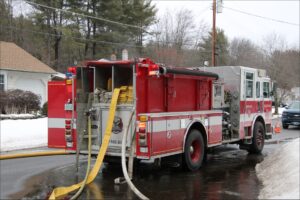
“Ladders hanging on the side of a parked engine serve no purpose. Once the pump is set, the driver should remove the ladders and get them in a forward position in case they are needed” (Angulo, Engine Company Fireground Operations, 2021).
With many communities only having one aerial on an initial response, placement of ground ladders often ends up being delayed and sometimes doesn’t occur at all. However, placing ground ladders provides a means of egress for those trapped, emergency egress for firefighters, and a potential point of entry for fire attack.
One method for ensuring that ground ladders are placed is by having the engine company motor pump operator (i.e., “chauffeur”) proactively deploy them at scenes. As the first moments on scene can be extremely busy for the MPO, this is not always practical. The MPO should always ensure they are able to adequately supply water to interior crews when needed and remain at the pump panel if necessary.
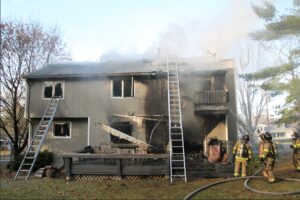
A typical engine carries a 24-ft extension ladder and a 14-ft roof ladder. When opportunistic, the MPO should attempt to deploy these ground ladders from the engine to the fire building. One method is to deploy a 24-ft ladder on the A side and the 14-ft roof ladder to a second-floor window on the C side. As always, fire scenes are fluid, and discretion and sound judgement should be exercised.
Employing tactics like this help maximize staffing on scene and improve operational efficiency.
Recent Comments